How is the Corona Virus Pandemic affecting the Sumatra Orangutan Conservation Programme and its development of a Songbird Breeding Centre?
Text by Ian Singleton, SOCP
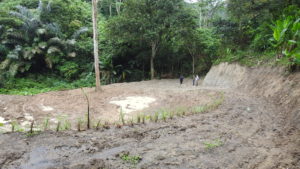
We would have hoped already to see buildings coming up… rather than just presenting a few sticks in a muddy field! Construction plans are delayed but it is not limitations in the current situation.
How is the situation in everyday life? The answer is basically very ’strange’! The reason is say that is that most of Indonesia is carrying on totally as normal…..out on the streets, in traffic jams, going to coffee shops, etc etc…..and yet the number of cases and deaths are extremely low!
Of course, there is massive under-reporting but even allowing for that, the numbers are still remarkably low! So, it is indeed weird as we really don’t know what is happening and it’s difficult to fully understand the situation.
Whilst much of the world is also debating what is going to happen in the second wave, I think we haven’t even had our first wave yet… and with it now being the month of Ramadan, and the numbers travelling around the country having been steadily increasing the last couple of weeks and about to peak this weekend, with millions of people also visiting relatives and friends, I think we are about to see a BIG increase in cases, to a peak in mid to late June. Let’s see…
As for how it’s affecting us at the SOCP, we realised early that there is a significant risk that orangutans could be affected, and this is supported by a few journal papers. We therefore locked down all our facilities with captive orangutans early on (the quarantine and reintroduction centres) and also ceased all activities at any of our field research stations to minimise any risk to the wild populations.
We have developed and implemented new policies and procedures to minimise risk of infections to staff and orangutans in our care, and protocols in case they do become infected. We’ve also raised funds and are now building a new high biosecurity “Covid quarantine facility” of 5 cages, totally isolated and at distance from all other facilities and apes at our quarantine centre. This is because whilst we are not sending any orangutans out of the centre (e.g. to the reintroduction sites) orangutans are still arriving. Therefore, we need to make absolutely sure they’re SARS-CoV-2 free before they are progressed through the system near other animals.
At the same time, we’ve had a hard look at our budgets. We estimate we are likely to incur around USD 150,000 unforeseen and unbudgeted costs at the quarantine and reintroduction centres (extra food and medical costs as we have 50% more orangutans than normal (74 versus a normal average of around 50, as we have been unable to release any), and we are trying to buy longer lasting foods etc in case of problems with supplies, and much higher prices for personal protective equipment for staff and vets. etc. All at the same time, like everyone else, we are predicting a significant drop in grants and donations for the rest of 2020, which will almost certainly run into 2021 as well, and maybe beyond.
So basically, interesting, and busy times, never a dull moment. Workload has increased for most of us due to all of the above, and having to hold more discussions online, often in several different time zones.
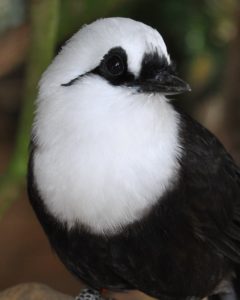
Therefore, the construction of the Sumatra Songbird Sanctuary facilities has been additionally delayed, however funding stands and we are confident that construction can proceed fairly soon to form homes for severely threatened Sumatran songbirds.
Find the most recent updates from the Sumatran Songbird Sanctuary here

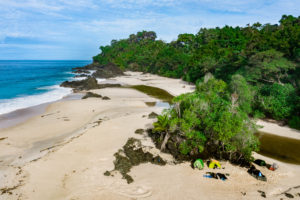
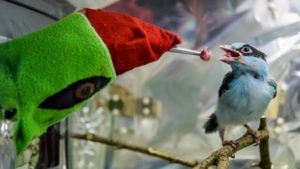
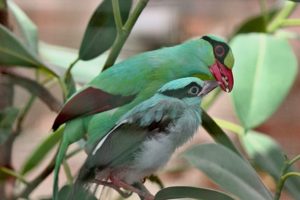
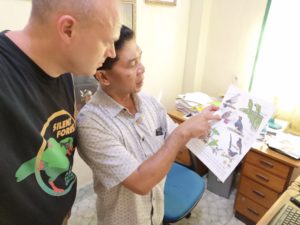
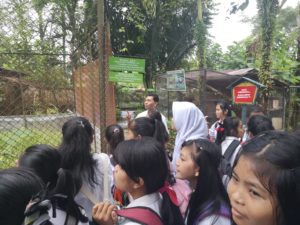
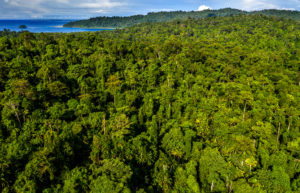
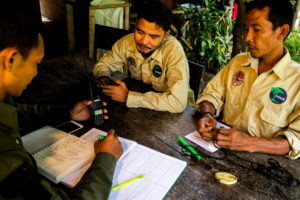
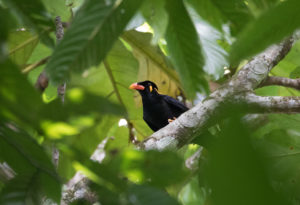
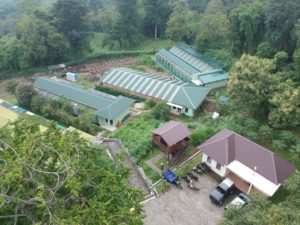
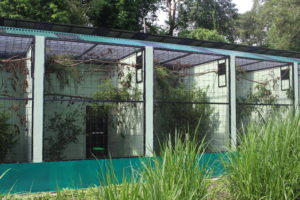
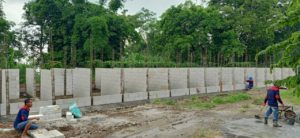 Construction on complex 6 in February 2020. Photo PCBA
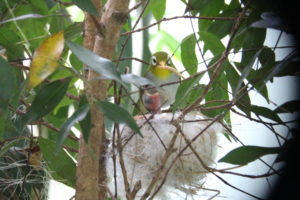 Wangi-Wangi White-eye with the very first chick. Photo PCBA
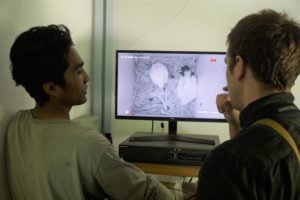
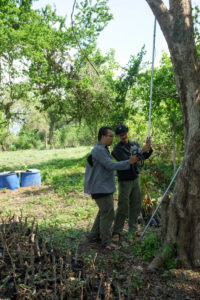 This has the added benefit of enabling relatively straightforward monitoring of breeding productivity, although it is still demanding work that takes time and patience throughout the breeding season, and an in-depth understanding of behaviour to ensure disturbance to birds is minimised. Mas Untung, Andri and Sasmita have taken on this task of detailed monitoring of the nestboxes and natural nest cavities used by Bali myna in close cooperation with national park staff. They are collecting extremely valuable breeding data, and with the help of an endoscope (or “snake camera”), have been able to collect some of the first definitive data on clutch size, numbers of chicks, and nesting success from wild birds.
 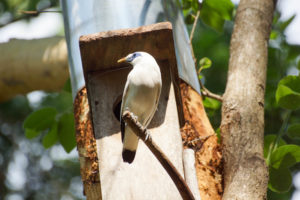 This work will continue until the end of the breeding season, thought to be around May/June, although some birds may actually continue to breed after this period, one reason for this important work to be a continual effort.
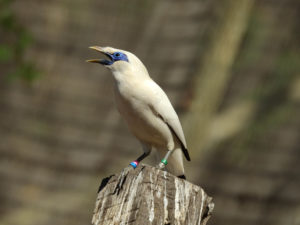 The use of coloured plastic rings now means that birds need not be re-caught to know their identity, reducing disturbance. Using these methods in Bali Barat on a sub-sample of the Bali myna population has helped us to understand the movement of birds between release sites – indeed, we have confirmed that birds are moving more than we expected! Furthermore, through continual monitoring and repeated registrations of the same birds over time, we are able to measure the birds’ apparent rate of survival, an important metric required to help build a population viability analysis.